
Bulgarian Beginner Vocabulary
Bulgarian for the Pharmacy, Doctor and Police
Боли ме, откраднаха ми, трябва ми лекар. The Bulgarian you need at a pharmacy counter or a police desk, plus the nod that means no.
Боли ме, откраднаха ми, трябва ми лекар. The Bulgarian you need at a pharmacy counter or a police desk, plus the nod that means no.
These are the phrases you cannot look up. Not because they are difficult, but because at the moment you need them your hands are full, you are sitting on a kerb, or the phone you would have typed into is the thing that just went missing.
Bulgarian is written in Cyrillic, which changes the problem. In Spain or Italy you can guess a sign from the shape of the word. In Sofia you cannot. АПТЕКА is a pharmacy and you will walk past four of them before you work that out. БОЛНИЦА is a hospital, СПЕШНО ОТДЕЛЕНИЕ is the emergency department, ПОЛИЦИЯ is the police. Learning to read those four words is worth more than any single sentence below.
The emergency number is 112, the same as everywhere in the European Union, and it works from any mobile. What follows is what to say once someone is listening, plus one gesture that can turn a clear answer into the opposite of what you meant.
Bulgarian does not say my head hurts. It says it hurts me, the head. The verb comes first, then ме for me, then the body part with the definite article stuck on the end as a suffix. Once you have the frame, you only need to swap the last word.
Pointing while you say it is not rude here and it removes most of the risk of getting the word wrong. If you only remember the two words боли ме and then put a finger on the place, you have communicated.
Bulgarian pharmacists work from behind a counter and hand you what you ask for, so you do not browse your way to a solution. You have to name the problem. In towns of any size there is usually a notice in the window of a closed pharmacy telling you which nearby one is on duty, marked дежурна аптека.
If you take something regularly, carry the box or a photograph of it. The active ingredient on Bulgarian packaging is printed in the same international Latin form you are used to, and a pharmacist who speaks no English at all can still read ibuprofen or amoxicillin off a label.
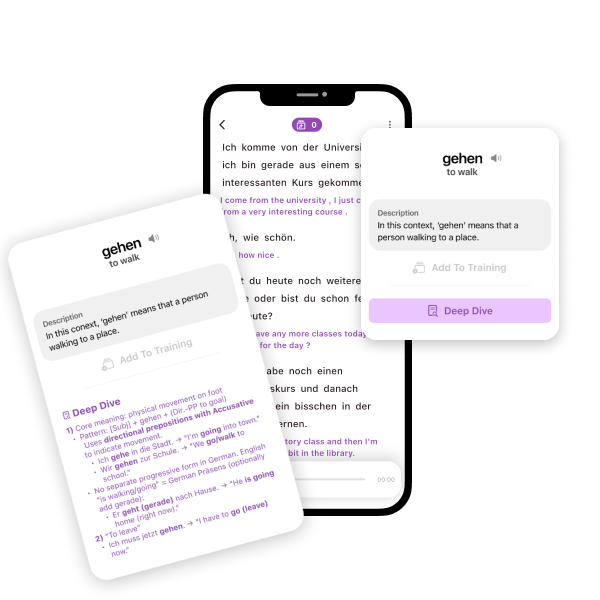
Photograph a sign, a menu or this page. LiT reads it, translates it, and sends the words you want to keep into your vocabulary trainer.
Try LiT Free

Here is the one piece of grammar that genuinely matters in a hospital. Adjectives in Bulgarian agree with the speaker's gender, so a man says алергичен съм and a woman says алергична съм. Get it wrong and you will still be understood, but there is a simpler route: use the noun. Имам алергия към, meaning I have an allergy to, is the same whoever is saying it.
Write your allergies on a card in Cyrillic before you travel and keep it in your wallet. It is the one thing that still works when you are not conscious enough to pronounce anything.
The verb for stolen is used in a form that English does not have. Откраднаха ми is literally they stole from me, with no stated subject, and it is the normal way to report a theft whether or not you saw a person. You never have to decide who did it in order to finish the sentence. The stolen object takes the definite article on the end, as the body parts did.
That fourth phrase is the one people forget to say. Insurers want a document, the police station produces one, and asking for it at the counter is far easier than going back for it two days later from another country.
Bulgaria is well known for reversing the head gestures. A side to side movement, more of a rocking of the head than an English shake, traditionally means yes. A short upward jerk of the chin, sometimes with a small click of the tongue, means no. How consistently this survives depends on who you ask and where, and it is genuinely disputed how much younger city Bulgarians still use it.
The real danger is not the gesture itself. It is that a Bulgarian talking to an obvious foreigner may deliberately switch to the English gestures to be helpful, which means a nod now carries two possible meanings and you have no way of telling which. In a pharmacy that is an inconvenience. In a conversation about whether a medicine contains penicillin it is not.
The fix is to take gestures out of the exchange entirely. Ask for the word, and say the word.
Дрога is not the word for medicine. It means narcotics, in the illegal sense, and asking a pharmacist for дрога will not go the way you hope. The word you want is лекарство, medicine, or лекарства in the plural.
A shop sign reading дрогерия is also not a pharmacy. Those are cosmetics and household shops. Prescription medicine comes from an аптека and nowhere else.
Bulgarian has the same two-level politeness split as French or German, ти for one person you know well and вие for strangers and anyone official. Every phrase on this page that has a formal ending, including извикайте and разбрахте, is in the вие form, which is the correct one for a pharmacist, a doctor, a nurse or a police officer. Do not strip the endings back to the short forms you may have heard friends use.
One more. Извинете is excuse me, the word for stopping a stranger in the street. Съжалявам is I am sorry, in the sense of regret. If you need help from someone walking past, you want the first one.
Standard Bulgarian is understood everywhere and the dialect differences you will meet, mostly in the far southwest and the northeast, affect how people sound rather than whether they follow you. Nothing on this page changes from one region to another.
What changes is the second language in the room. In Sofia, Plovdiv, Varna and the larger coastal resorts you have a reasonable chance that a younger pharmacist or a hospital receptionist has some English. In small towns and villages, and with older people generally, that is less likely, and the shared language may turn out to be Russian or German instead. This is the situation the written card in your wallet is for.
Bulgarians answer the phone with ало, which exists for the telephone and almost nothing else. When you call 112 the first thing you will be asked for is where you are, not what has happened, because the dispatcher needs to start moving something towards you.
Have the answer ready before you dial: the town, then the street, then the number. Say the town name first and say it slowly. Speaking slowly is the single most useful thing you can do on that call, and it is the first thing that goes when you are frightened. Practise these lines calmly now, and practise them again at speed, because the version of your voice that makes the call will not sound like the version reading this.
In writing there is a wrinkle worth knowing. Bulgarians very often type Bulgarian in Latin letters in text messages, so an address someone sends you may arrive looking nothing like the Cyrillic on the street sign. If you need an address, a chemist's name or a medicine written down, ask for it on paper or on screen rather than by ear.
| Situation | Say this | What it does |
|---|---|---|
| Something is hurting | Боли ме + the body part | Covers almost every symptom with one frame |
| Pharmacy counter | Имате ли нещо за... | Asks for a remedy by problem, not by brand |
| Before taking anything | Имам алергия към... | No gender ending to get wrong |
| Someone collapses | Извикайте линейка! | Gets an ambulance called by whoever is nearest |
| Wallet or phone gone | Откраднаха ми... | Reports the theft without naming a culprit |
| At the police station | Трябва ми протокол за застраховката | Gets the document your insurer will demand |
| Checking an answer | Да или не? | Removes the ambiguous nod from the exchange |
| On a 112 call | Town, then street, then number | Answers the question you will be asked first |
Learn three things this week: боли ме with a pointing finger, откраднаха ми, and the number 112. Add да или не, because the nod will fail you exactly once and it will be at the worst possible moment.
Then spend ten minutes on the four words АПТЕКА, БОЛНИЦА, ПОЛИЦИЯ and СПЕШНО. Being able to read a sign is what gets you to the person these phrases are for.

Благодаря gets an answer in Bulgarian, and silence is noticeable. Here are the please, sorry and thank you exchanges, with the replies you owe back.
How to ask where something is in Bulgarian, understand the landmarks and prepositions in the reply, and read a head nod that means the opposite of what…
A stranger in Bulgaria opens with the same five questions in roughly the same order. Here are the replies that keep the conversation going.