
Gujarati Beginner Vocabulary
Please and Thank You in Gujarati, and the Reply Owed
આભાર, માફ કરજો and the words Gujaratis actually use for please, plus the reply you are expected to hand back when someone thanks you.
આભાર, માફ કરજો and the words Gujaratis actually use for please, plus the reply you are expected to hand back when someone thanks you.
Gujarati has perfectly good words for please and thank you, and you can spend a week in Ahmedabad without hearing either of them. That is not rudeness. The politeness is already sitting inside the sentence, carried by the ending on the verb and by what you call the person in front of you. Bolting a word for please onto the front is at best redundant, and at worst a small signal that you are keeping someone at a distance.
The second thing to know is that thanks is not free. A proper આભાર opens something, and it expects a closing move from the other side. A flat okay, or a nod and nothing else, leaves the other person holding the end of an exchange you started. The reply matters as much as the thanks does, and it is the half that almost nobody teaches.
Tap play on any phrase below and say it back before you read the gloss. The respellings are a crutch and they will only get you close. Gujarati keeps k apart from kh and t apart from th, and keeps a dental t apart from a retroflex one, and English spelling has no honest way to show any of that.
Before any phrase, there is the choice of you. તું is for children, for siblings and very close friends, and in devotional poetry for God. તમે is for everyone else: a stranger, a shopkeeper, a colleague, anyone noticeably older than you. There is no real cost to being too formal in Gujarati and a very real cost going the other way.
Then the verb does the rest. The plain polite command ends in -ઓ, as in કરો, do it. Soften it to -જો and it reads as a request rather than an instruction, often for something to be done in a while rather than this second. This is why the ordinary Gujarati goodbye is a command: આવજો is literally do come, and it is the warmest thing you can say on the way out of a house.
The other soft move is to ask the future as a question. Instead of ordering water, you ask whether water will be given, and you drop જરા, a little, in front of it to shrink the imposition.
મહેરબાની કરીને means please in the sense of doing a kindness. મહેરબાની came into Gujarati from Persian, and the phrase is literally an instruction to do a kindness. કૃપા કરીને is the same construction built on કૃપા, grace, from Sanskrit. Both are correct and neither is casual.
Where you will actually meet these is in print and in pleading: a notice asking you not to park, a railway announcement, someone asking a favour they know is large. In a shop or a kitchen, the please is the -જો ending or the future question, and reaching for મહેરબાની કરીને to ask for a bag of flour sounds like you are about to ask for a loan instead.
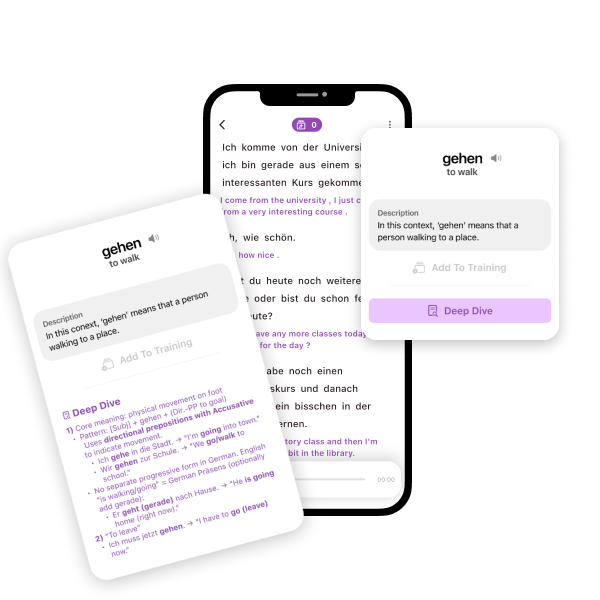
Photograph a sign, a menu or this page. LiT reads it, translates it, and sends the words you want to keep into your vocabulary trainer.
Try LiT Free

આભાર is the everyday Gujarati thank you, and it is the one to learn first. It works spoken and written, with strangers and with people you know a little, and it does not sound stiff.
ધન્યવાદ is Sanskrit in origin and shared with Hindi. It is heavier and more ceremonial, the word for a stage, a formal letter, a vote of thanks at the end of an event. Used across a shop counter it is not wrong, only slightly grand.
And then there is English. Thank you is fully naturalised in Gujarati speech, especially in cities and especially among anyone under forty, and nobody hears it as a foreign word. If you say આભાર you will sound slightly more careful than the person you are talking to, which is a safe place to be.
There is no single fixed formula in Gujarati for you are welcome, which is exactly why learners get stranded. What there is instead is a small set of moves that all do the same job: they shrink what you did so the other person does not feel indebted.
જી is the respect particle, and it attaches to a yes or stands alone. Saying હા જી to an older person is not formal in the cold sense, it is the ordinary warm register you would use with an uncle.
What does not work is silence followed by nothing, or a bare English okay. Okay is a decision, not a response to a person. It reads as closing a transaction, and after a favour it lands cold.
માફ is from Arabic by way of Persian, and માફ કરજો is forgive me in the soft -જો form you already met. This is the all purpose apology: you trod on a foot, you arrived late, you interrupted. It is also how you politely refuse something.
The size matters. માફ કરજો for a bumped elbow, માફી માગું છું for a missed obligation. ક્ષમા કરો belongs to writing, speeches and religious contexts, and over a spilled cup of tea it sounds like a scene from a play. The reply to all of them is the same small wave of the hand: વાંધો નહીં, or કંઈ નહીં.
Gujarati addresses almost everyone as family. A man your own age or a little older is ભાઈ, brother. A woman is બેન, sister. These are not jokes or slang, they are the standard way to open with a shopkeeper, a rickshaw driver or a stranger whose name you do not know, and leaving them out is the most common way a foreigner sounds abrupt without knowing it.
The same words attach to names. Ramesh becomes રમેશભાઈ, Nita becomes નીતાબેન, and in Gujarati speech that suffix is close to obligatory for anyone you are not intimate with. If you are introduced to someone and then use the bare first name back, you are making a choice you probably did not mean to make.
Thanking close family for ordinary things is the big one. If your host's mother has refilled your plate for the third time and you say આભાર each time, you are not being polite, you are drawing a line between yourself and the household. Inside a family, service is assumed, and formal thanks converts it into a favour between strangers. Eat, say it was good, that is the thanks.
The same applies in reverse. If a Gujarati friend does something large for you and does not say thank you when you do something back, that is not ingratitude. The word has been withheld on purpose, because using it would be a mild demotion.
The other two to avoid: તું with anyone you have just met, which lands roughly where first-naming a stranger's grandmother lands in English, and stacking politeness markers. કૃપા કરીને mehrbani plus a -જો verb plus please is not three times as polite. It sounds like you are either begging or being sarcastic.
Everything above works across Gujarat. What varies is how much of it people bother with. Speech in Saurashtra and Kathiawad is widely described as blunter and more direct than in Ahmedabad or Surat, with fewer softeners and more volume, and none of that is unfriendliness. Surat has its own well known accent and its own reputation for speed. In Kutch, many people speak Kutchi, which is a separate language rather than a Gujarati dialect, although Gujarati is widely used alongside it.
In the diaspora, in Britain, East Africa and North America, the English borrowings have taken over the polite slots almost completely. Thank you, sorry and please are the default in everyday family speech, while આભાર and ધન્યવાદ survive in writing, at temple and at formal occasions. The kinship terms, though, travel intact. ભાઈ and બેન are used in Leicester exactly as they are used in Rajkot.
Phones are answered with હેલો, borrowed and ordinary. In many families, particularly in Vaishnav households, the greeting both on the phone and at the door is જય શ્રી કૃષ્ણ, and the same phrase comes back as the answer. It is a greeting, not a religious statement aimed at you, and saying it back is simply the second half of the pair.
Writing raises the register sharply. Formal Gujarati uses આપ for you in place of તમે, and a letter or an email will sign off with આભાર or a longer phrase of thanks where a conversation would use nothing at all. Messaging goes the other way. On WhatsApp between friends you will mostly see Gujarati typed in Latin letters with English thanks and sorry dropped straight in, and the formal words appear only when someone is writing to a teacher, a landlord or an elder.
| Situation | What you say | What should come back |
|---|---|---|
| Shopkeeper hands you change | આભાર, or nothing at all | ભલે, or a nod |
| Someone went out of their way | ખૂબ ખૂબ આભાર | કંઈ નહીં |
| You bump into a stranger | માફ કરજો | વાંધો નહીં |
| Asking a favour of an elder | A -જો verb, with તમે | હા જી, or ભલે |
| A speech or a formal letter | ધન્યવાદ | No reply expected |
| Family, everyday help | Nothing | Nothing |
Learn માફ કરજો and આભાર this week, and learn વાંધો નહીં so you have something to hand back when they are said to you. Those three cover the shop, the street and the doorway.
After that, the real work is the small stuff: તમે rather than તું, ભાઈ or બેન before you ask anything, and the -જો ending that turns an order into a request. Listen for which of these the people around you actually use, because the rule is always the same and the amount varies by house.


Благодаря gets an answer in Bulgarian, and silence is noticeable. Here are the please, sorry and thank you exchanges, with the replies you owe back.

Kerem, koszonom, bocsanat and the answers a Hungarian speaker expects back. Which one fits a stranger, and why silence reads as cold.

Ačiū, prašau and atsiprašau are the easy part. Here is the ending that changes with who you thank, and the answer you are expected to give back.