
Croatian Beginner Vocabulary
Ordering Food in Croatian, From Table to Bill
Sitting down, ordering, changing what is in it, getting a refill and asking for the bill.
Sitting down, ordering, changing what is in it, getting a refill and asking for the bill.
The thing that catches most visitors out in Croatia is not the vocabulary. It is the timing. The bill does not arrive when you have finished eating, and an empty glass is not a signal. A waiter who sees you sitting with a clean plate and a folded napkin reads that as a person who is comfortable. Nothing happens until you ask, and asking is the part worth learning properly.
The word that does most of the work is molim. On its own it means please. After hvala it means you are welcome. With a rising tone it means pardon, I did not hear you. On the telephone it means hello. You will use it four different ways in one hour and it is the single most useful word on this page.
Croatian spelling is consistent in a way English is not, so the respellings below are a crutch you can put down quickly. Learn that j is the y in yes, c is the ts in cats, č and ć are both roughly ch, š is sh, ž is the s in measure, and you can read the original. Stress in standard Croatian almost never falls on the last syllable, so when in doubt, push it forward.
In cafés, konobas and most restaurants outside the very formal end, you seat yourself. Walking in and standing by the door waiting to be placed will usually get you a confused look. Say dobar dan to the room as you come in, pick a table, sit down.
Coffee comes with a glass of water, usually without being asked and usually without being charged. Sitting over one coffee for an hour and a half is normal behaviour and not something you need to apologise for. When you do want the waiter, you do not call out the word for waiter. You catch an eye, raise a hand slightly, and say oprostite.
The waiter will arrive and say izvolite, which has no clean English equivalent. It means go ahead, here you are, what can I get you, all at once. You will hear it when they take the order and again when they put the plate down.
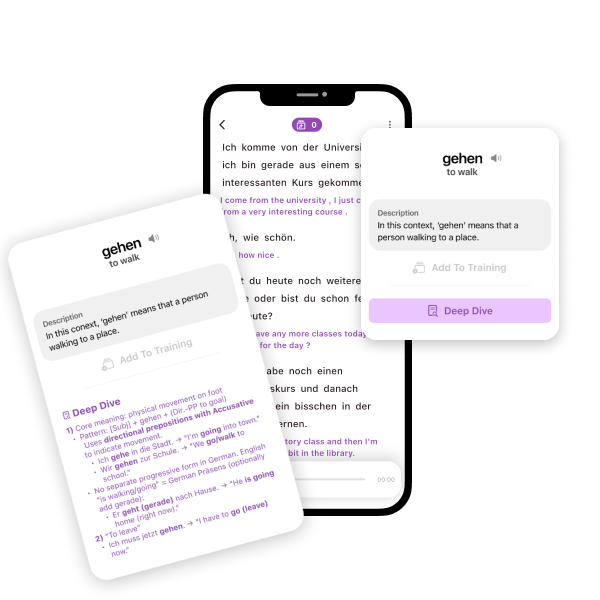
Photograph a sign, a menu or this page. LiT reads it, translates it, and sends the words you want to keep into your vocabulary trainer.
Try LiT Free

This is the one piece of grammar you cannot route around when ordering, because it sits in the middle of the shortest sentence you will say. Croatian nouns have gender, and the words for one and two change to match. Pivo, beer, is neuter, so it is jedno pivo. Kava, coffee, is feminine, and as the object of a sentence it shifts to kavu, so it is jednu kavu.
Two is dva for masculine and neuter things and dvije for feminine ones, which is why dva kave is the mistake you will hear other visitors make all summer. Nobody will refuse to serve you over it. It simply marks the sentence as assembled from a list rather than spoken.
If you want to soften the order, put htio bih in front of it. The ending changes with the gender of the speaker, not the thing ordered, so a man says htio bih and a woman says htjela bih.
Bez means without, and it is the most efficient word in this part of the meal. Put it in front of whatever you do not want and you have made yourself understood: bez luka, without onion, bez sira, without cheese, bez leda, without ice.
Worth knowing before you ask: a dish described on the menu as coming with something is often built that way in advance, and a kitchen in a small konoba may simply say no. The answer is not rudeness. Rebuilding a plate to order is less of an expectation than it is in Britain or the United States, and the polite move is to take the no and choose something else.
If the request is medical rather than a preference, say so, because that changes how it is treated. Alergičan sam for a man, alergična sam for a woman, then na and the thing.
Još means more, or another. Put it in front of the number and you have the refill. For beer, wine and anything else neuter, još jedno is all you need, and it works with a glance at the empty glass.
Among friends the whole thing collapses to može još jedno, with a question in the voice. If you are drinking with Croatians, the toast is živjeli, literally may we live, and glasses are clinked with eye contact.
Račun is the bill. The phrase is two words and it is the only way the bill is going to reach your table. The gesture of scribbling in the air works as well here as anywhere, and plenty of people use both at once.
Card is accepted in most places in the cities and along the tourist coast, less reliably in a small inland gostionica or a konoba on an island, so ask before the food arrives rather than after. Croatia uses the euro, and prices on menus are printed in it.
Tipping is a round up rather than a calculation. People commonly leave the change or round the total to a convenient figure, and the machine brought to the table often does not offer a line for adding it, so cash left on the saucer is the practical option.
Do not call out konobar. It is the correct word for waiter and it is not how a waiter is summoned; shouted across a terrace it lands as a summons to a servant. Oprostite does the job and costs nothing.
Do not use molim te. It is the singular, familiar form, and the person serving you is molim vas however young they look. The same split runs through everything: vi for anyone you do not know, ti for friends and children. Getting this wrong is the most common error visitors make and the one most likely to be silently noticed.
Hoću means I want, and hoću pivo is grammatical, blunt and the register of a tired child. Jedno pivo, molim or htio bih is what an adult says. And bok, the casual hello and goodbye you will hear everywhere, is for peers; walking into a quiet inland restaurant and greeting an older owner with bok is not offensive but it is conspicuously informal, where dobar dan never is.
One more, for anyone who learned some Croatian from a neighbouring country. Coffee is kava in Croatia. The form kafa is normal elsewhere in the region and is understood perfectly here, but it tells everyone at the table where you learned the word.
The words on this page work from Osijek to Dubrovnik. What shifts is the vocabulary around them. Inland you eat in a gostionica, on the coast in a konoba, and the house wine comes diluted differently in each: gemišt is white wine with sparkling water and belongs to the continental north, bevanda is wine with still water and belongs to Dalmatia. Ordering one in the other's territory is not an error, just a tell.
On the Adriatic, and in Istria especially, centuries of Venetian and Italian contact sit in the restaurant vocabulary, and parts of Istria County are officially bilingual, with menus printed in Croatian and Italian side by side. You may hear Italian derived words used for the bill and for parts of the service there. Račun is understood in every one of these places, so it is the word to use.
The other difference is pace. A coastal lunch in August runs on its own clock, and the waiter is not ignoring you. Ask, wait, ask again without irritation.
Croatians answer the phone with molim, or with halo, and a restaurant will often answer with its own name instead of any greeting at all. None of this is a greeting you need to return in kind; dobar dan after it is always right.
On the phone you will be asked for a time and a name. Times are given on the twenty four hour clock, so eight in the evening is u dvadeset sati or simply u osam navečer, and you will see 20:00 or 20h written on a confirmation. Expect to spell your name letter by letter.
In writing the register splits sharply. A message to a restaurant page or an email to a hotel opens with Poštovani, the formal Dear, and closes with lijep pozdrav. A text to a friend about meeting for coffee opens with bok and nothing else, and the whole arrangement will often be three words long: kava u pet, coffee at five.
| Moment | Polite | Relaxed |
|---|---|---|
| Getting attention | Oprostite, molim vas | Oprostite |
| Ordering a drink | Htio bih jedno pivo | Jedno pivo, molim |
| Another round | Još jedno, molim vas | Može još jedno? |
| Changing the dish | Može li bez sira, molim vas? | Bez sira, molim |
| Asking for the bill | Račun, molim vas | Račun, molim |
| Paying by card | Mogu li platiti karticom? | Karticom? |
| Leaving | Hvala lijepa, doviđenja | Hvala, bok |
Three phrases get you from the door to the street: dobar dan on the way in, jedno pivo, molim or whatever you are actually drinking, and račun, molim at the end. Add još jedno for the refill and you will not go thirsty.
The rest is listening. Sit with a coffee and a glass of water for an hour, which is exactly what everybody around you is doing, and the words will arrive with the context attached.

Ljekarna, not apoteka. The Croatian you need at a pharmacy counter, a clinic and a police desk, plus the one sentence that says you did the stealing.
Croatian small talk follows a script. Here are the five questions a stranger asks first, the answers that keep it going, and the ones that end it.
Molim, izvolite, pomalo, fjaka and hajde. Five words you will hear in your first week in Croatia, and what each one assumes about you.