
Serbian Beginner Vocabulary
Serbian Prices and Haggling, Written and Spoken
Dinar prices look simple on a tag and change shape the moment somebody says them.
Dinar prices look simple on a tag and change shape the moment somebody says them.
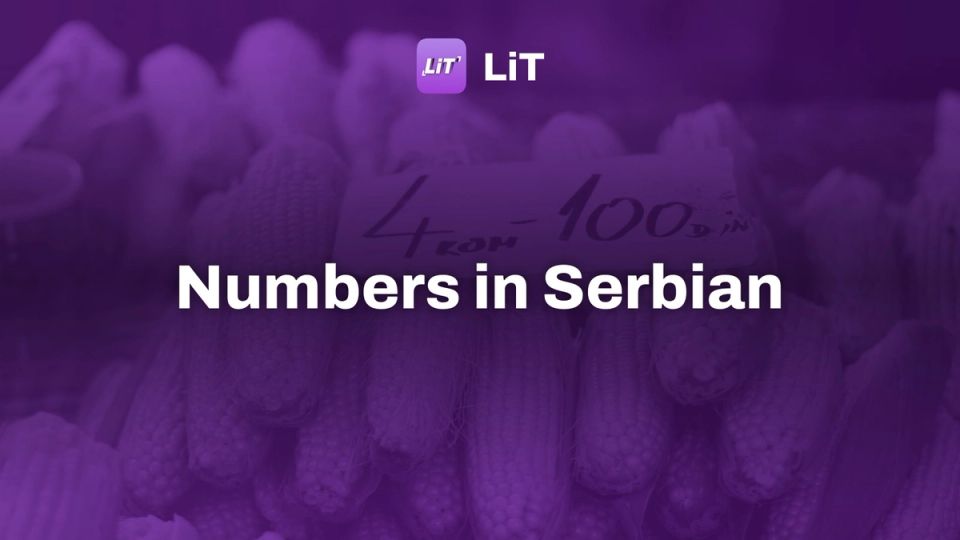
A Serbian price tag gives you digits and an abbreviation. A Serbian stall holder gives you a sentence, and the sentence contains grammar that the tag hid from you. That gap is where most people come unstuck: you can read 450 дин. off a crate of peppers without knowing a word of Serbian, and then not recognise the same price when it is said out loud.
The thing almost nobody is told early enough is that in Serbian the number changes the noun after it. Not the other way round. One is followed by one form, two three and four by another, five and upwards by a third. Prices are the worst possible place to learn this, because the word dinar happens to look identical in both of the forms you need, so you can say dinara for everything from two upwards and never be wrong. Then you order fruit, and it bites.
Serbian spelling is one letter to one sound, so the respellings below are closer to the truth than they would be in most languages. What they cannot carry is the pitch accent, which is real and which no respelling honestly represents. Treat the capitals as the loud syllable and let the recordings do the rest.
Jedan takes the plain dictionary form of the noun, and it also changes for gender: jedan dinar, but jedna marka. Two, three and four take a special counting form. Five and above take the genitive plural. Any compound number ending in one behaves like one, so twenty one dinars is singular, which feels wrong for weeks.
With dinar the trap is invisible, since the two forms are both dinara. Put a feminine noun in the same slot and the difference shows up immediately: dve jabuke for two apples, pet jabuka for five. Learn the pattern on fruit, not on money, and money will take care of itself.
There are two questions. Koliko košta is the neutral one and works in a shop, a cafe, a taxi or a museum. Pošto is the market question, short and slightly blunt, and it is what you hear people actually say over a crate of tomatoes.
The answer is usually a bare number with the currency left off entirely. Sto dvadeset means a hundred and twenty dinars and nothing else needs saying. If you are waiting for the word dinara to confirm that you heard a price, you will be waiting a long time.
Photograph a sign, a menu or this page. LiT reads it, translates it, and sends the words you want to keep into your vocabulary trainer.
Try LiT Free

Sto is a hundred. Two hundred and three hundred are irregular, dvesta and trista, and from four hundred on the pattern settles down into četiristo, petsto and so on. A thousand is hiljadu in the counting form you will hear in prices, and two thousand is dve hiljade, because hiljada is feminine and obeys the same two three four rule as everything else.
In compound numbers the linking i is optional. Sto dvadeset i pet and sto dvadeset pet are both normal, with the i more common in speech. The thousand banknote is colloquially a hiljadarka, and in relaxed speech you will hear the h in hiljada go missing altogether.
Haggling at a Serbian green market is not a performance. It is three or four short turns, and the movement is usually small: a round number instead of an awkward one, or a bit extra thrown into the bag. Knowing the sequence matters more than knowing clever words.
Then there is the paying, which trips people up more often than the bargaining. Stalls want cash and small notes, and being asked for sitno is routine rather than rude.
First, do not haggle where prices are printed. A pijaca, a flea market and a souvenir stall are negotiable. A supermarket, a pharmacy, a bakery and a cafe are not, and asking for a discount over a barcode marks you out in a way nobody will mention.
Second, watch the imperative. Daj mi popust uses the singular you, which is for friends, children and people much younger than you. To a stall holder it lands somewhere between pushy and childish. Dajte is the form you want, or better, ask with može and let the verb do the softening.
Third, para has two lives. Historically it is the hundredth of a dinar, and you will still see two decimal places on a receipt, but para coins are not part of everyday life. In the plural, pare simply means money in casual speech. Koliko para is a question about money in general, not about small coins, and it is noticeably informal.
The grammar on this page holds across the whole region. The currency does not. Serbia uses the dinar, Bosnia and Herzegovina the convertible mark, which everyone calls marka or KM, and Montenegro and Croatia use the euro. The number words barely shift; the thing on the end of them does.
The other split is Ekavian against Ijekavian. In Serbia you will see and hear cena and dve. In Bosnia and Montenegro the same words are cijena and dvije. Neither is a mistake, and both sides understand the other without effort.
One more word worth flagging: hiljada is the Serbian thousand, while Croatian prefers tisuća. In Serbia tisuća sounds borrowed, in Croatia hiljada sounds foreign, and nobody is confused by either.
On the phone, prices come fast and without the currency, and you lose the number before you have parsed the grammar. One phrase fixes most of it, and nobody minds hearing it twice.
In writing the conventions flip around. Serbian uses a full stop for thousands and a comma for decimals, so 1.500,00 is one thousand five hundred, not one and a half. Classified ads carry their own shorthand, and two phrases in particular tell you whether there is anything to negotiate at all.
Both scripts are in use, often on the same street and sometimes on the same receipt. The digits are identical in Cyrillic and Latin text; only the currency word changes, and the spoken version is the same either way.
| On the tag | What it means | Said aloud |
|---|---|---|
| 450 дин. | 450 dinars, Cyrillic abbreviation | četiristo pedeset dinara |
| 450 din. | 450 dinars, Latin abbreviation | četiristo pedeset dinara |
| 1.200,00 РСД | 1,200 dinars exactly | hiljadu dvesta dinara |
| 1.200,00 RSD | the same price, Latin script | hiljadu dvesta dinara |
| 2.500 дин/кг | 2,500 dinars per kilo | dve hiljade petsto po kilu |
| 21 din. | 21 dinars, singular noun | dvadeset jedan dinar |
Learn pošto je ovo and može jeftinije this week and you can open and continue a negotiation at any market in Serbia. Add pet dinara as your model for everything from five upwards, and the case endings will start to sound normal before you can explain them.
The rest arrives by standing at a stall and listening to the number come back at you without the word dinara attached. Photograph the tags, the ads and the handwritten signs, and let the grammar turn up with the price already on it.

Izvolite, prijatno, merak, inat, bre. Words you will hear in your first week in Serbia, what each one actually does, and when not to say it.

Serbian loses its tone the moment it goes through a phone. Here is what replaces it: fillers, softeners and the diacritics nobody types.
A Lithuanian price tag is written flat, but the number changes shape the moment you say it out loud. Numbers, prices and haggling, with audio.