
Bosnian Beginner Vocabulary
Who Gets Zdravo and Who Gets Dobar Dan in Bosnian
Bosnian has a hello for every distance between two people. Here is which one fits a stranger, a neighbour, a friend, and a text message.
Bosnian has a hello for every distance between two people. Here is which one fits a stranger, a neighbour, a friend, and a text message.
Most phrasebooks hand you zdravo and leave you there. It is a real word and you will hear it constantly, but it is one rung down from the greeting a stranger expects, and using it everywhere is the clearest sign that you learned Bosnian from a list rather than from a street.
Bosnian sorts greetings on three axes at once: how old the other person is, how well you know them, and whether the setting is private or public. The language also makes you choose between two words for you, and that choice is baked into the question you ask after hello. Pick wrong and nothing dramatic happens. You will simply be answered in the formal form, over and over, which is what a correction looks like here.
There is a fourth axis in Bosnia that does not exist in most of Europe, and it is the one visitors fumble: some greetings carry a community marker. Knowing which, and knowing that you wait to be greeted that way first, matters more than your accent.
Zdravo comes from zdrav, healthy, so it is a wish for health in the same way the English cheers once was. It sits in the middle of the register: perfectly good for a neighbour on the stairs, a colleague your own age, a friend of a friend, the person at the gym. It is not rude to a stranger, but it is familiar, and to someone a generation older it lands the way calling a new acquaintance by their first name lands in English.
Ćao is the Italian ciao, borrowed across the Adriatic, and it works in both directions like the original. It is the greeting of people who already like each other. Said to a shop assistant or an official it is not friendly, it is presumptuous. One note for travellers who also use Croatian: in Croatia, zdravo is heard much less and carries associations from the Yugoslav period. In Bosnia it is ordinary and nobody reads anything into it.
This is the greeting you default to when you do not know the person. It is polite without being stiff, it works for one person or a room, and it is what you say walking into a bakery, a pharmacy, a bank, or a doctor's waiting room. If you learn one greeting this week, learn this one.
Laku noć is the trap in that set. It looks like the evening twin of dobro jutro and it is not; it is a parting word. Announce it on arriving at a dinner at nine in the evening and you have told the room you are leaving before you sat down. The word for arriving is dobro veče. You will also see dobra večer in writing and hear it from Croat speakers; both forms of the noun exist, and dobro veče is the one you will hear most in Sarajevo.
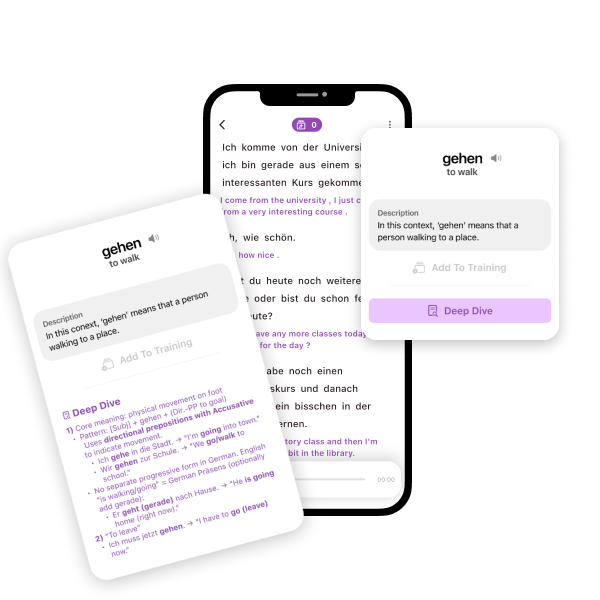
Photograph a sign, a menu or this page. LiT reads it, translates it, and sends the words you want to keep into your vocabulary trainer.
Try LiT Free

Bosnian splits you into ti, one person you are close to, and Vi, which is both the plural and the polite singular. The greeting itself does not always show the choice, but the question that follows it does, and that is where learners give themselves away.
Who gets Vi: anyone serving you or being served by you, anyone in an office, any teacher, doctor, police officer, and anyone visibly a generation older. Who gets ti: friends, children, family, and usually anyone your own age in a bar or at a party. Among people in their twenties, ti goes both ways almost immediately and Vi starts to sound like a joke.
The move down from Vi to ti is offered, not taken. An older neighbour will often say something to the effect that you can drop the formality, and after that, staying on Vi reads as cold. Until then, Vi costs you nothing. The cheapest safety net is to match whatever is said to you: if the shopkeeper asks kako ste, you answer with the same form.
Merhaba came into Bosnian from Arabic through Turkish, and it is a greeting with a community attached: you will hear it most among Bosniaks, between people who know each other, and in Sarajevo, Tuzla, Zenica and the smaller towns of central Bosnia. The reply is the same word back.
Selam alejkum is the heavier of the two and it is not a general hello; it belongs between Muslims, and in and around a mosque it is the greeting. The thing to know is the reply, because if someone greets you that way and you answer with zdravo, the exchange has visibly failed. The sensible approach for a visitor is to recognise both, answer in kind when greeted, and lead with dobar dan yourself. Nobody is offended by dobar dan.
Being welcomed into a Bosnian home is a two-part formula, and knowing only the first half leaves you standing in a hallway holding your shoes. The host says dobro došli, literally well come. The guest has a fixed answer: better to have found you.
Prijatno is the one worth copying because it does two jobs. On the way out of a shop it is a warm goodbye, slightly softer than doviđenja. Said to someone who is eating, it means enjoy your meal, and you will hear it from waiters setting a plate down and from strangers passing your table. Nothing about the word tells you which sense is meant; the situation does.
One habit that is not optional: in Bosnia you greet the space, not the individual. Walking into a small shop, a lift, a waiting room or a café without saying anything is noticeable in a way it is not in London. One dobar dan to the air covers everybody in the room.
Three mistakes, in roughly the order a visitor makes them. The first is ćao to anyone behind a counter. It is the word for people you already know, and to a pharmacist twice your age it is not breezy, it is forward. Nobody will say so; they will just keep using Vi.
The second is mixing registers inside one breath, the way learners say dobar dan and then kako si. Polite hello, intimate question. It sounds precisely like two phrases learned separately and glued together, because that is what it is.
The third is reaching for selam alejkum because it was the most interesting phrase on the page. Used by a visitor to someone who has not used it first, in a mixed company or a shop, it reads as a claim about who you are rather than a hello. Wait to be greeted that way, then answer correctly. That is the whole skill.
A word on the respellings above. They are a crutch, and in Bosnian they conceal two things. Length and pitch on stressed vowels do real work, and no English respelling can carry them, which is why native speech has a rise and fall your reading of DOH-bar dahn will not have. What the respellings do get right is that the stress never sits on the last syllable of a multi-syllable word, so doviđenja takes its beat in the middle and not at the end. If you fix one thing, fix that.
Everybody in the country understands everything on this page. What shifts from place to place is which greeting comes out first. In Sarajevo and central Bosnia you will hear merhaba and zdravo in roughly equal measure. In Banja Luka and the rest of Republika Srpska, zdravo and dobar dan do almost all the work, and merhaba is uncommon. In Croat-majority parts of Herzegovina, including west Mostar, you will hear bok, which came south from Zagreb.
None of these are greetings you need to switch between to be understood. They are greetings you need to recognise, so that bok from a waiter in Mostar does not throw you. Dobar dan is the one that is correct in every town, in every community, with every age group, and that is the argument for making it your default rather than zdravo.
Small vocabulary differences travel alongside. Bosnian says šta for what, where Croatian says što, so šta ima is the Bosnian shape of what's up. Nobody will misunderstand either.
On the phone, Bosnian does not open with a greeting at all. You answer with halo, or with molim, which elsewhere means please and you're welcome and here means roughly go ahead. Both sound blunt written down and are completely ordinary spoken.
As the caller you owe more. Greet with dobar dan, say your name immediately, and say what you are calling about, because the person on the other end has nothing to go on. Business lines often pick up with izvolite, which is the same word a waiter uses handing you a menu.
In writing, the register splits hard. A message to a friend opens with ćao or nothing at all, and the diacritics vanish: cao, sta ima, and the abbreviation pozz, short for pozdrav. An email to a stranger does not use any of the greetings above. It opens with Poštovani for a man or a mixed group, Poštovana for a woman, the equivalent of Dear, and it closes with Pozdrav or a more formal sign-off.
One typographic habit: in formal writing, Vi and its forms are capitalised mid-sentence as a mark of respect, which is why you will see a capital V inside an email. And in Republika Srpska you will see signage in Cyrillic as well as Latin, so the same dobar dan may reach you in a different alphabet.
| Situation | Say this | Avoid |
|---|---|---|
| Texting a friend | Ćao, šta ima? | Dobar dan, which reads as a memo |
| Walking into a small shop | Dobar dan | Ćao |
| Neighbour your own age on the stairs | Zdravo | Selam alejkum, unless greeted so first |
| Doctor, teacher, official | Dobar dan, kako ste? | Kako si? |
| Arriving at someone's home in the evening | Dobro veče, then bolje vas našli | Laku noć |
| Answering an unknown number | Halo or Molim? | Zdravo |
| Email to someone you don't know | Poštovani, closing with Pozdrav | Ćao |
| Leaving a bakery at noon | Doviđenja or Prijatno | Laku noć |
Dobar dan and kako ste will get you through every shop, office and waiting room in the country without a misstep. Add zdravo for people your own age, and learn bolje vas našli so that the first time someone welcomes you into their home you have the other half of the exchange ready.
Everything else is recognition rather than production: hear merhaba, hear bok, hear ćao, and let the person in front of you set the register before you match it.

The letter c, the r with no vowel in it, and the pair Bosnians blur themselves.
The Bosnian you need when something goes wrong: naming pain, asking for the nearest pharmacy, reporting a theft, and why hedging makes it worse.
Привет to the wrong person lands badly. Здравствуйте, привет and the time-of-day greetings, with the ты and вы rule that decides which one you use.