
Telugu Beginner Vocabulary
Telugu Numbers, Prices and the Haggling Rules
Telugu prices rarely come out the way they are written. The spoken number forms, the phrase that opens a bargain, and where haggling is rude.
Telugu prices rarely come out the way they are written. The spoken number forms, the phrase that opens a bargain, and where haggling is rude.
You can learn one to ten in Telugu in an afternoon and still not understand a single price in a Hyderabad vegetable market. Three things get in the way. The counting word for one is not the word you put in front of a noun. Hundreds and thousands reshape themselves when they combine. And the biggest number in the system, the lakh, has no English equivalent, so the grouping of the digits on a price tag is not the grouping you expect.
Numbers are also the part of a language that gets said fastest. A vendor who repeats a price for you will slow down once, and after that you are on your own. Tap play on the cards below and listen for where the stress falls, because that is what tells you whether you heard a hundred and fifty or two hundred and fifty.
One warning about the respellings on this page. Telugu distinguishes dental and retroflex consonants, and it distinguishes aspirated from unaspirated ones. English spelling cannot show any of that. The respellings will get you close enough to be understood; they will not get you accurate.
Counted out loud, the first ten are okati, rendu (REN-doo), muudu (MOO-doo), naalugu (NAA-loo-goo), aidu (EYE-doo), aaru (AA-roo), eedu (AY-doo), enimidi (eh-nih-mih-dee), tommidi (TOM-mih-dee), padi.
Then you try to buy one kilo of something and the word changes. Telugu uses a shorter form of one in front of a noun, and okati is wrong there. The other numbers do not do this; rendu stays rendu whether you are counting or buying.
The twenties through the nineties are their own words and have to be learned flat: iravai 20, muppai 30, nalabhai 40, yaabhai 50, aravai 60, debbai 70, enabhai 80, tombhai 90. After that you simply add the unit.
A hundred on its own is vanda. But the moment something follows it, it becomes nuuta. This catches people out constantly, because a hundred and fifty, the single most common price in a street market, does not contain the word you learned for a hundred.
The lakh is where written and spoken part company. Indian digit grouping puts the commas at 1,00,000 and 1,00,00,000, not at 100,000 and 10,000,000, so a rent or a car price on a sign has to be read in the local system or not at all. Above the lakh comes koti, ten million. Nobody says hundred thousand in Telugu, and nobody says million.
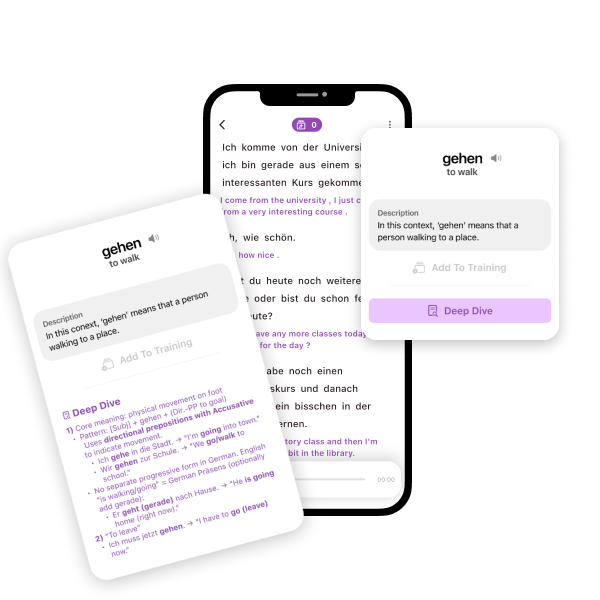
Photograph a sign, a menu or this page. LiT reads it, translates it, and sends the words you want to keep into your vocabulary trainer.
Try LiT Free

Most of what you buy in a market is priced by weight, so the number you need is usually attached to a kilo. Half is ara and quarter is paavu, and both sit in front of the unit.
The question itself is short. Enta means how much, and you can put it after almost anything. Adding andi at the end is the single cheapest politeness move in Telugu: it is a respect particle with no translation, and it turns a blunt question into a civil one.
There are two moves and they do different jobs. Chaalaa ekkuva says the price is high. It is a reaction, not a request, and said lightly it is the normal opening. Taggincandi is the actual ask: reduce it. The -andi ending makes it the polite form, and you want the polite form with everyone you do not know.
When you are ready to close, there is one question that ends the back and forth. Ask it once. Asking twice tells the seller you were never going to accept the first answer.
The dividing line is whether the price is written down. Street carts, open vegetable markets, bangle and textile shops with no tags, auto rickshaws running without the meter: all of these quote a price out loud, and a quoted price is an opening position. Supermarkets, branded showrooms, pharmacies, restaurants and anything with a printed tag are not negotiable, and trying is the kind of thing people tell stories about afterwards.
Packaged goods in India carry a printed Maximum Retail Price, the MRP, on the wrapper. It is the legal ceiling, so a shop cannot charge above it, and it also means the number is already public. Haggling over an MRP is not a negotiation, it is an argument. Check the wrapper before you open your mouth.
How far a price actually moves is smaller than most visitors assume. In an ordinary neighbourhood market the room is modest, and the exchange is a short ritual rather than a contest. Asking for half the stated price is a move that belongs in places set up for tourists, and it reads as either a joke or an insult everywhere else.
The first mistake is dropping the -andi. Taggincu without it is the familiar imperative, the form you would use with a child or a close friend. Said to a woman twice your age selling tomatoes, it lands badly, and she will not tell you so.
The second is how you get someone's attention. Telugu speakers address strangers with kinship terms rather than sir or madam, and anna for a man and akka for a woman of roughly your age or a little older are the safe ones in a market.
The third is reopening a closed deal. Once you have said sare, the price is fixed, and going back to it is the one thing that genuinely annoys people. The fourth is small change. Vendors often do not have it, and chillara leedu is a sentence you will hear far more often than you expect.
Telugu is spoken across Andhra Pradesh and Telangana, and the market language is not the same in both. In much of Hyderabad a question asked in Telugu may well come back in Hindi or in the Dakhni Urdu of the old city, with the numbers in that language too. This is not a snub, it is just what the street runs on. Telangana speech carries more Urdu vocabulary generally, and you will hear paisalu for money where a speaker from the coastal districts might say dabbu.
The other variation is not regional at all, it is urban. In cities, prices above about twenty are very often given in English, even inside an otherwise entirely Telugu sentence. You will hear forty rupees and one fifty from someone who has not used an English word in a minute. Learn the Telugu numbers anyway, because the older the seller and the smaller the town, the less often this happens.
Phone numbers are read out digit by digit, and in most of urban Andhra Pradesh and Telangana they are read out in English digits regardless of what language the rest of the call is in. Do not expect to hear tommidi for a nine in a phone number.
Telugu has its own numerals, ౦ ౧ ౨ ౩ ౪ ౫ ౬ ౭ ౮ ౯, and you will see them in older printed books and on the occasional piece of official or religious text. You will not see them on a price tag. Shop signs, menus and bills all use the Arabic digits, with Indian comma grouping and the rupee symbol.
Writing is also where payment has quietly changed the negotiation. QR codes sit on vegetable carts and tea stalls across both states, and paying the exact agreed amount by phone removes the change problem altogether. In messages, prices get abbreviated the way English speakers abbreviate thousands: 50k, 1.5L for one and a half lakh, 2 Cr in a property listing. And a great deal of casual Telugu messaging is typed in Roman letters rather than the Telugu script, so enta may arrive on your phone spelled entha, or enthaa, or anything in between.
| Phrase | Use it when |
|---|---|
| ఇది ఎంత? idi enta | Any shop, any time. The neutral question. |
| కిలో ఎంత అండి? kilo enta andi | Vegetables, fruit, anything sold by weight. |
| చాలా ఎక్కువ chaalaa ekkuva | Your opening reaction, said lightly, in an untagged shop. |
| కొంచెం తగ్గించండి koncham taggincandi | Once you have decided you want the thing. |
| చివరి ధర ఎంత? chivari dhara enta | Closing the bargain. Ask it once only. |
| సరే, ఇవ్వండి sare, ivvandi | You have agreed. The price is now fixed. |
| వద్దు vaddu | You are not buying and you want to end it. |
Learn enta, koncham taggincandi and nuuta yaabhai first. The question gets you a number, the request gets you a better one, and the hundred-and-fifty form teaches you the one piece of grammar that makes the hundreds make sense.
Everything else you pick up at the stall, because prices are said fast and only ever repeated once. Listen more than you speak for the first few days, and point your phone at the price boards while you are at it.

A Lithuanian price tag is written flat, but the number changes shape the moment you say it out loud. Numbers, prices and haggling, with audio.

Dinar prices look simple on a tag and change shape the moment somebody says them.

A price on a Slovak label and a price said out loud are two different things. Here is how euro becomes eura becomes eur, and what to say at a market stall.